Samsung Order Support
This project is under NDA
Enter the password to view this case study
Incorrect password — try again
Content management
OVERVIEW
PROBLEM
Samsung was spending millions annually on support contacts for questions that could be self-served. There was no help center, no order lookup, no FAQ—nothing between "I have a question" and "talk to an agent."
GOAL
Design an interconnected self-service ecosystem—help center, order lookup, support articles, and intake form—to deflect simple contacts and free agents for complex issues.
Process
Analyzed customer contact data to identify the highest-volume, lowest-complexity question categories—the sweet spot for self-service.
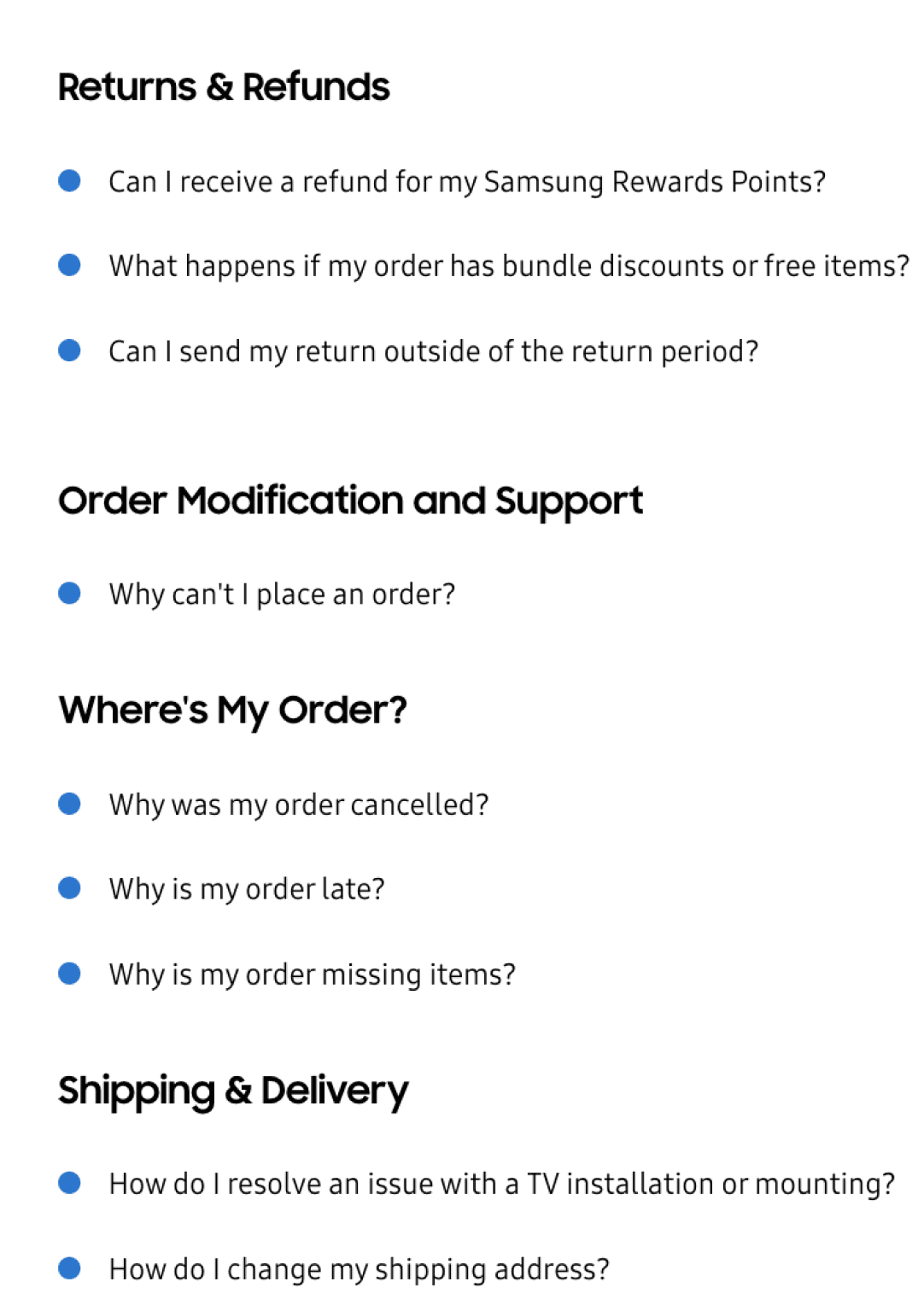
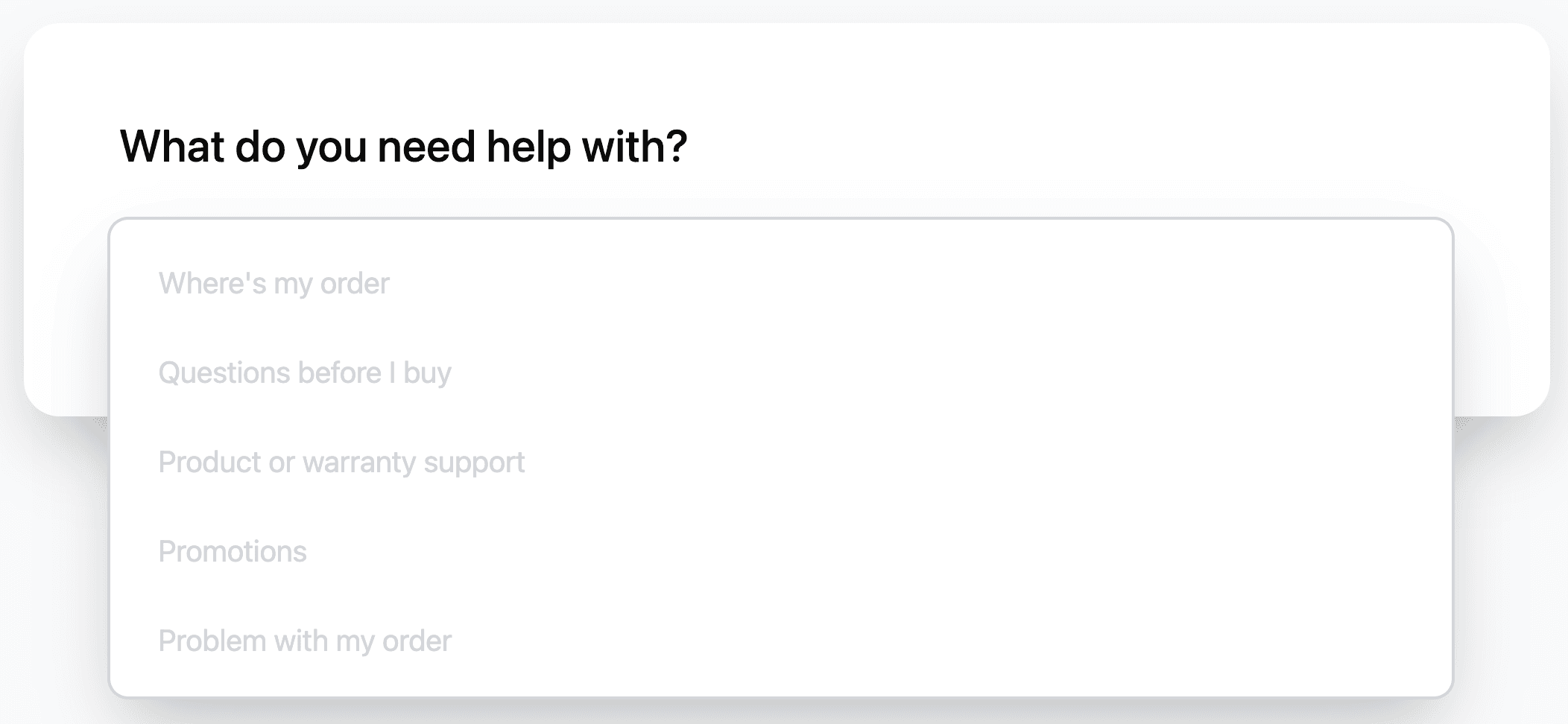
Designed a support intake form informed by research on what agents actually need to resolve issues quickly.
Mapped the full user support flow to identify where self-service could intercept contacts before they reached an agent.
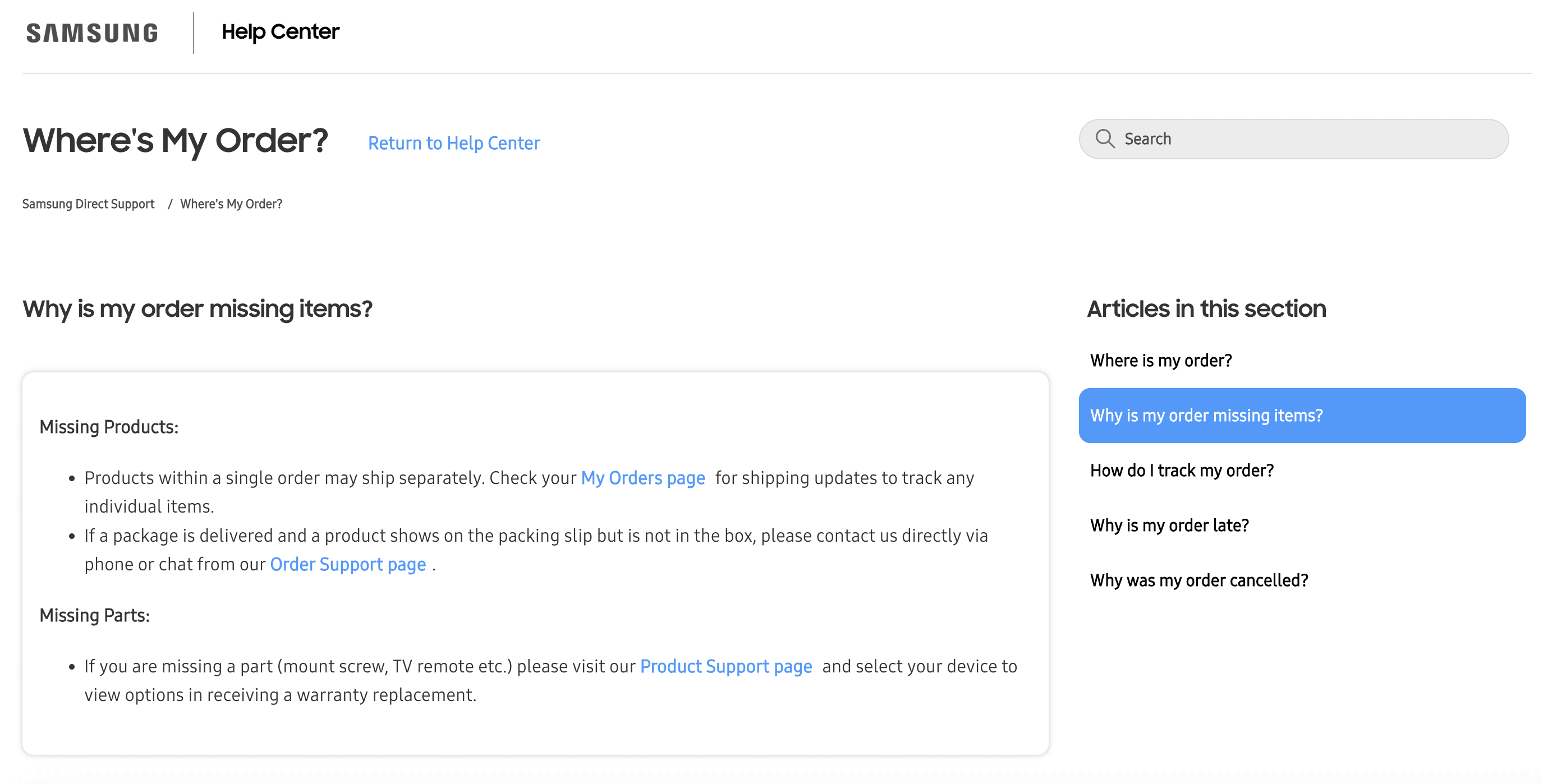
Built the information architecture, taxonomy, and SEO-optimized article titles for a support article repository.
Design
I designed an interconnected system of self-service tools: an order support landing page, a searchable help center, a support intake form, and a repository of SEO-optimized articles. The architecture was built to intercept contacts at multiple points—before, during, and after a support need arises.
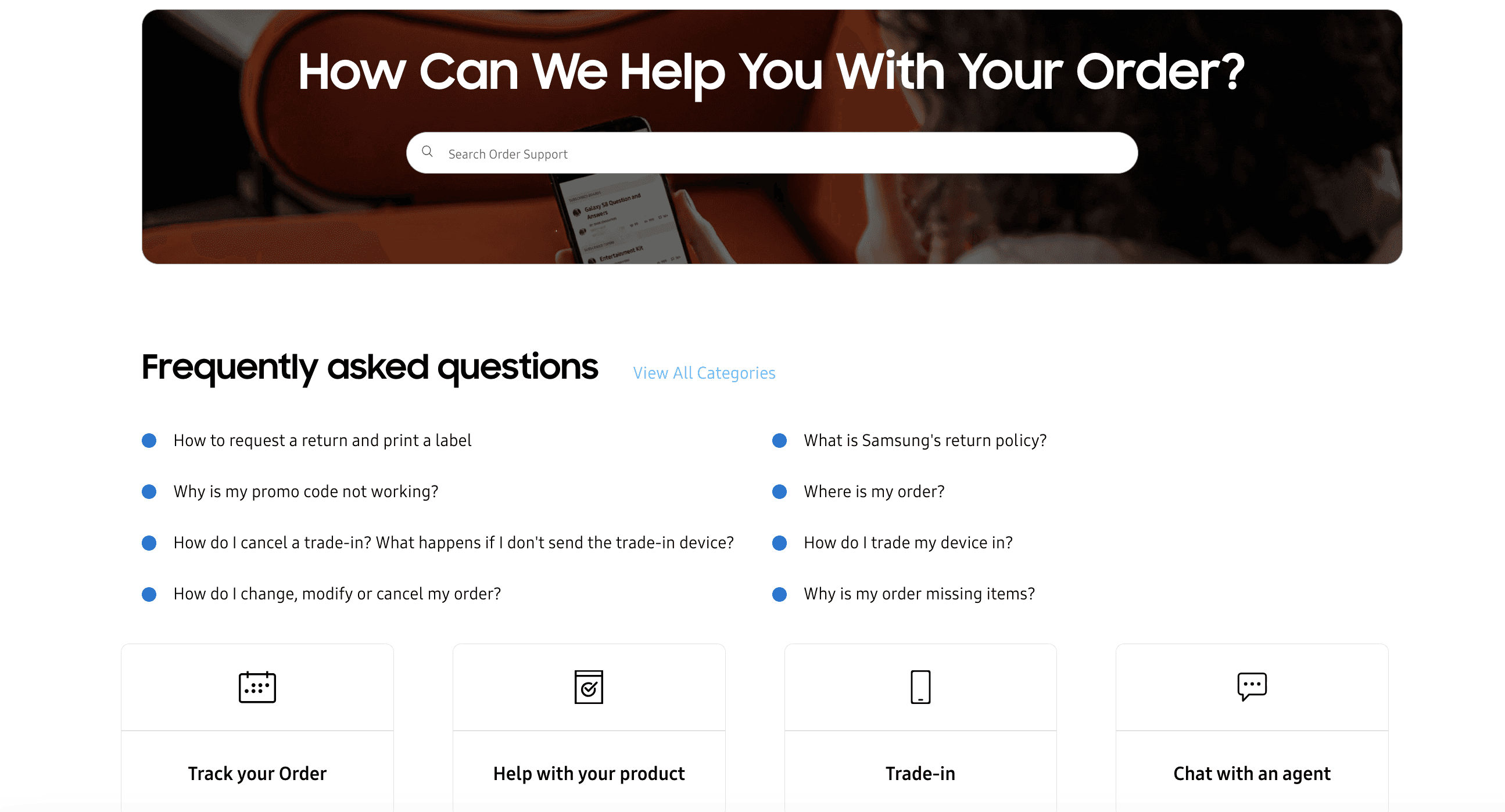
Order support landing page
Outline
Form
Articles
Results
70% reduction in customer support contacts within 6 months of launch—millions in annual savings and significantly faster resolution for the complex issues that still required agents.
Takeaways
• Most support contacts aren't complex—they're just unsupported. Self-service infrastructure is a content design problem, not a customer service problem.
• The taxonomy and IA decisions drove more impact than any individual article. Getting the structure right meant users could find answers; getting it wrong meant a beautiful help center nobody could navigate.
This project is under NDA
Enter the password to view this case study
Incorrect password — try again
This project is under NDA
Enter the password to view this case study
Incorrect password — try again