Interests on Instagram
Content design
Overview
Instagram wanted to help teens connect over shared interests—a low-pressure alternative to DMs and public posting. The feature needed to feel safe, scale globally, and work within strict teen privacy constraints.
Problem
Teens had no way to discover who in their network shared their interests. Existing connection paths (follow, DM, comment) were all high-pressure and public.
Goal
Design an interest-sharing feature with scalable taxonomy, emoji mapping, and localization strategy—built for a teen audience within Meta's safety and legal framework.
Process
Defined default privacy settings and restricted actions with product design and management, then wrote and tested disclosure copy that made those settings clear without being intimidating.
Proposed a scalable interest taxonomy—built to grow with the product rather than requiring a rebuild at each new market launch.
Mapped emojis to every interest category, navigating legal review and working with Meta's internal emoji specialist to determine what we could and couldn't use across locales.
Design
Emoji list
Animals
🐶 Dogs
🐱 Cats
🐦 Birds
🐰 Rabbits
🦎 Reptiles
🐟 Fish
Outdoors
🌍 Memes
🎭 Comedy
Arts
✍️ Writing
🎬 Film
📚 Reading
🧶 Knitting & sewing
🎨 Painting
🎭 Acting
📷 Photography
Food
🍳 Cooking
🍔 Foodie
Technology
🤖 Robotics
💻 Design
🌱 Sustainability
🔬 Science & research
Music
🎤 Hip hop & rap
🎵 Pop
🎶 K-pop
🎸 Rock
🎼 Classical
🎷 Jazz
🎧 R&B
🎛️ DJs
✏️ Songwriters
🎻 Country
Sports
⚽ Soccer
🏀 Basketball
🏈 Football
⚾ Baseball
🥋 Martial arts
🤼 Wrestling
🛹 Skateboarding
⛷️ Skiing
🏄 Surfing
🚴 Cycling
Wireframes
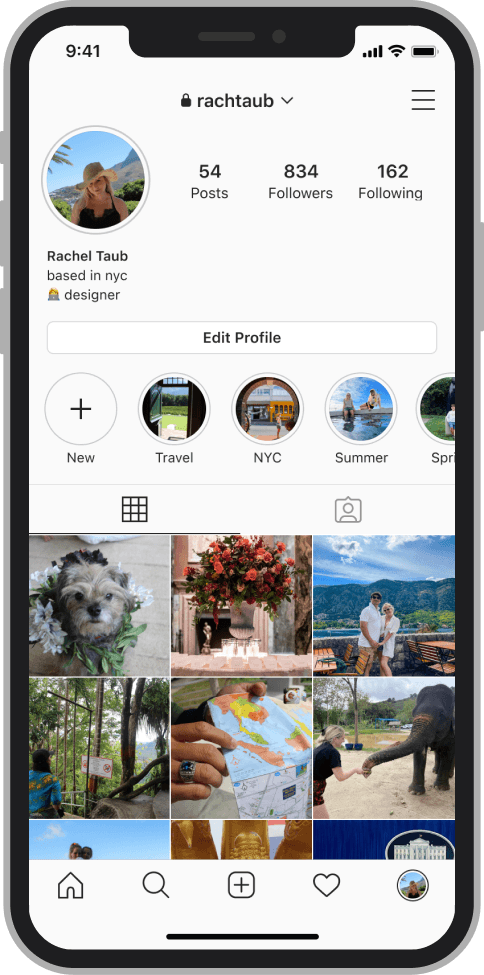
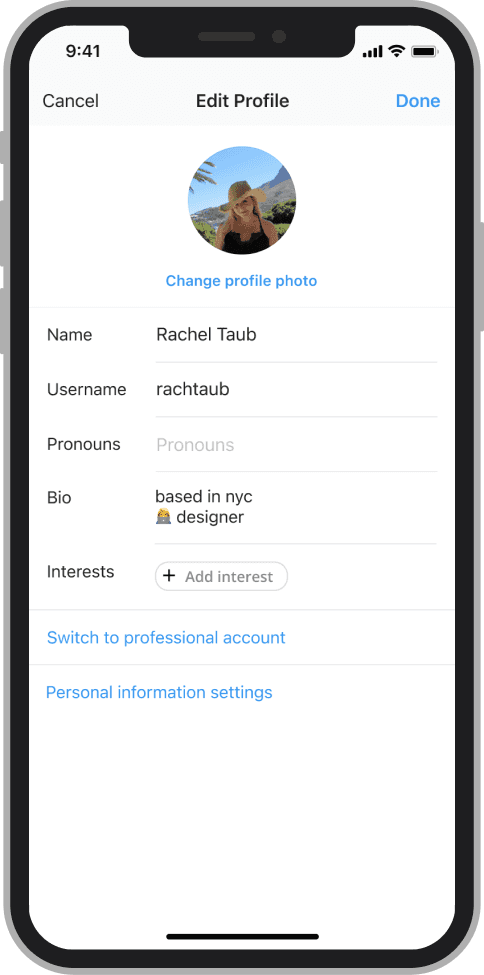
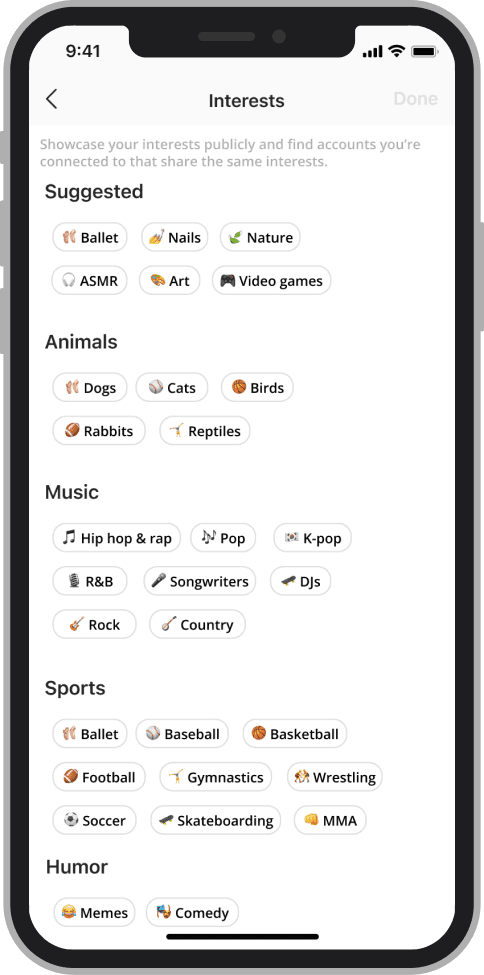
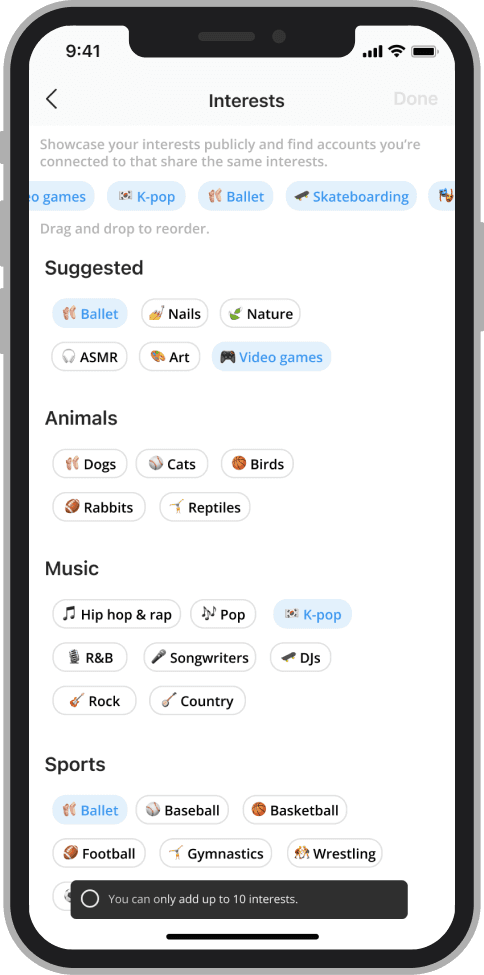
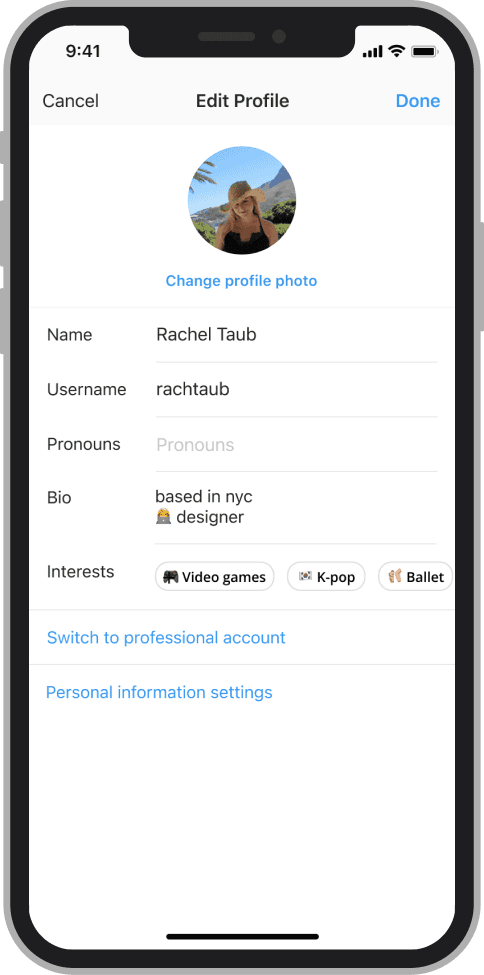
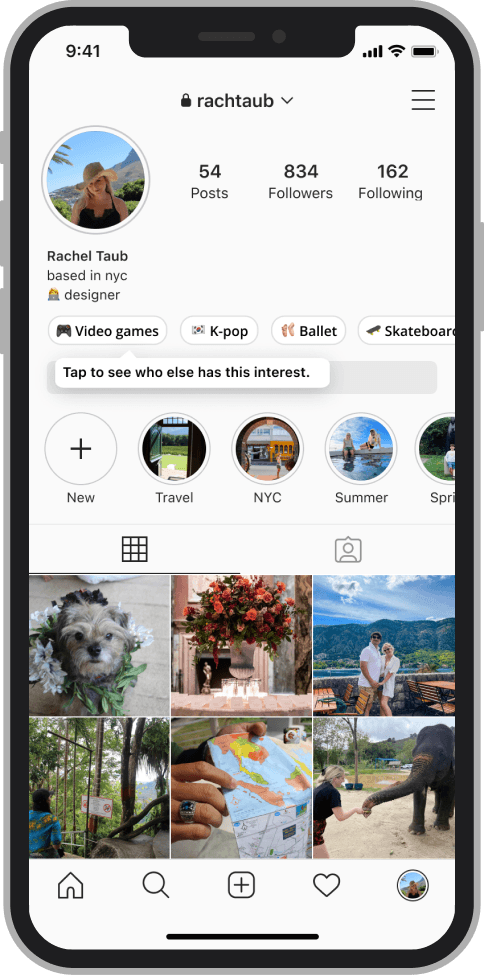
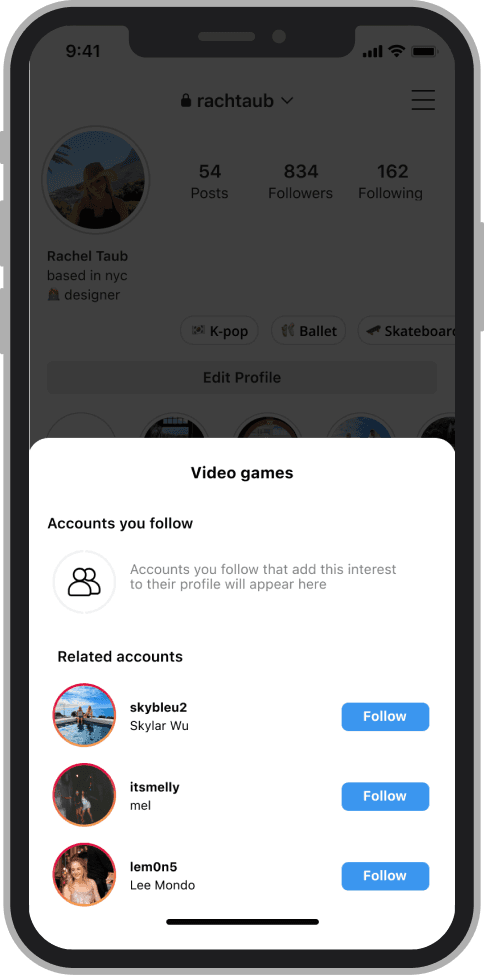
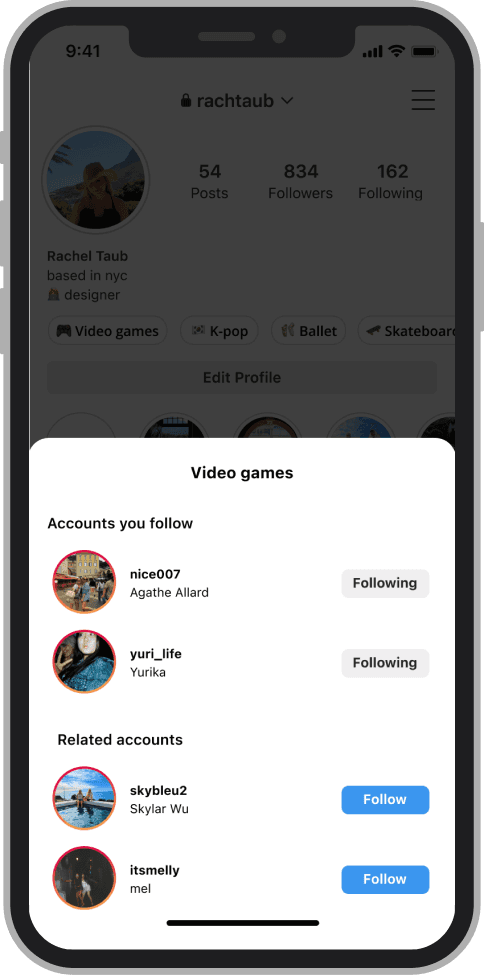
Results
Research participants responded significantly more favorably to interests with emojis—validating the investment in emoji mapping.
Short-term: Ship a universal interest list, roll out by social graph, and subtract locale-inappropriate interests.
Long-term: Add locale-specific interests informed by regional research.
The localization strategy was the real design challenge—not the UI.
Building a taxonomy that works globally without offending locally required more cross-functional alignment than any other part of the project.
This project is under NDA
Enter the password to view this case study
Incorrect password — try again